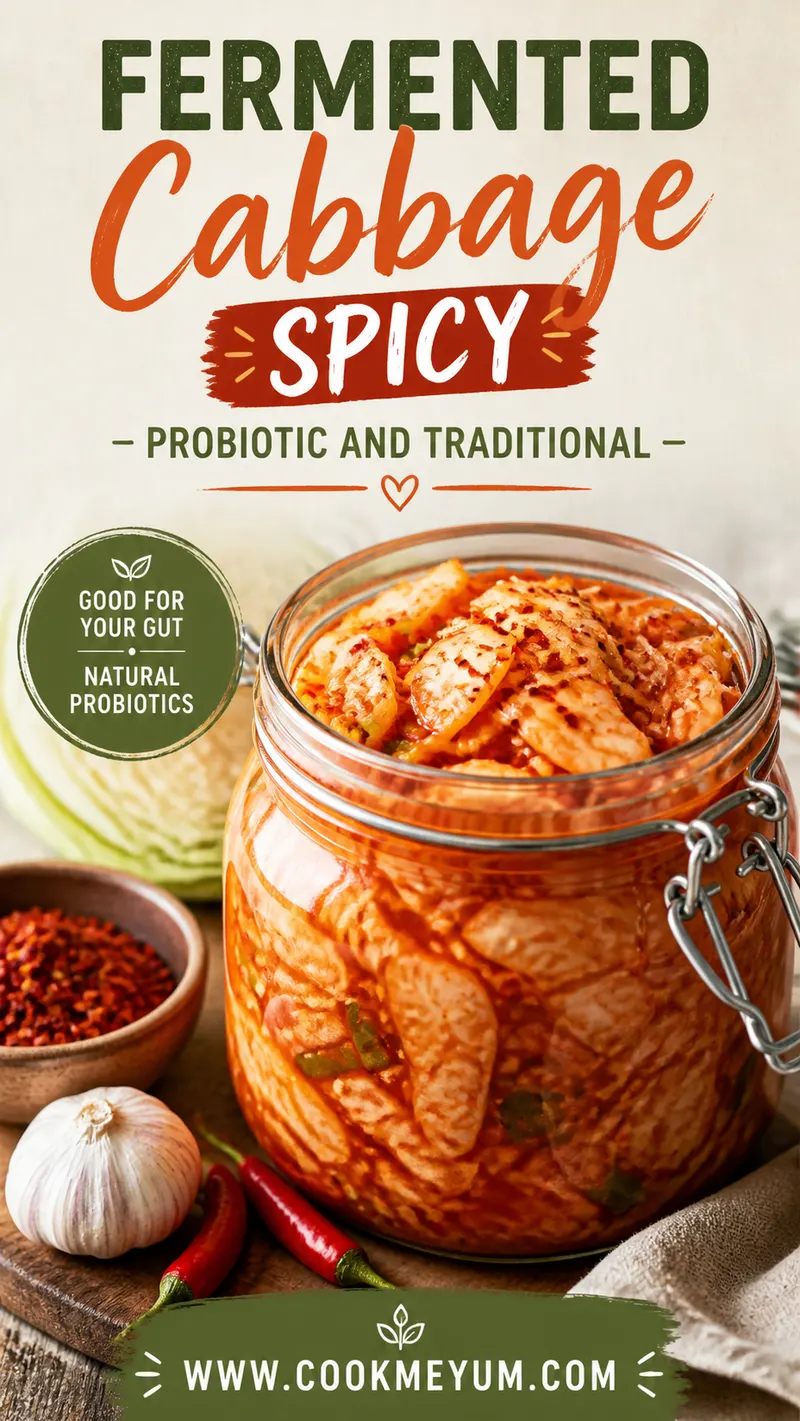
Fermented Cabbage Spicy – Probiotic and Traditional
A spicy, probiotic-rich fermented cabbage dish inspired by traditional sauerkraut, with garlic, ginger, and chili for a bold kick.
Transform your meals with this Fermented Cabbage Spicy recipe, a delightful combination of gut-friendly probiotics and vibrant flavors! This traditional dish is not only packed with nutrients but is also incredibly easy to prepare, making it perfect for busy weeknights.
Fermented Cabbage Spicy
- Packed with probiotics that promote gut health.
- Unique spicy twist adds a new dimension to traditional fermented cabbage.
- Quick to prepare and requires minimal ingredients.
Ingredients
- 1 medium head of green cabbage: finely shredded
- 2 tablespoons sea salt: to aid fermentation and flavor
- 2 tablespoons chili flakes: adjust to taste for the desired spice level
- 3 cloves garlic: minced, for an aromatic kick
- 1 tablespoon grated ginger: adds depth and warmth
- 1 cup water: ideally filtered for best results
How to Make
Begin by placing the finely shredded cabbage in a large bowl, then sprinkle the sea salt over it. Massage the salt into the cabbage for about 5-10 minutes until it starts to release moisture. Next, add in the chili flakes, minced garlic, and grated ginger, mixing thoroughly. Once combined, pack the mixture tightly into a clean glass jar, ensuring it is submerged in its own juices to promote fermentation. If needed, add a little filtered water to cover the cabbage completely. Seal the jar with a lid, but keep it slightly loose to allow gases to escape. Let it ferment at room temperature for about 5-7 days. Taste it occasionally until it reaches your preferred level of tanginess.
Tips
- Use a fermentation weight or a clean stone to keep cabbage submerged.
- Experiment with spices like cumin or coriander for unique flavors.
- Ensure all utensils and containers are sanitized to prevent unwanted bacteria.
Make-Ahead
This Fermented Cabbage Spicy can be prepared weeks in advance, as the flavors will deepen and improve over time, making it an excellent option for meal prep.
Storing
Once fermented, store your cabbage in the refrigerator. It will stay fresh for several months as long as it’s kept in an airtight container.
Freezing
While freezing is possible, it can alter the texture of the cabbage. If necessary, freeze in small portions for convenient use.
Reheating
Fermented cabbage is best enjoyed cold or at room temperature, as heating can diminish its probiotic benefits. However, you can lightly sauté it if preferred.
Serving Suggestions
Serve this spicy, fermented cabbage as a side dish, on top of tacos, or mixed into salads for added flavor and crunch. It pairs wonderfully with grilled meats, fish, or even as a topping for rice bowls. Check out this fermentation weight on Amazon to enhance your fermentation experience!
Related Recipes
Ingredients
- 1 medium head of green cabbage, finely shredded
- 2 tablespoons sea salt
- 2 tablespoons chili flakes
- 3 cloves garlic, minced
- 1 tablespoon grated ginger
- 1 cup water, ideally filtered
Instructions
Prepare cabbage
Place the shredded cabbage in a bowl and sprinkle sea salt. Massage for 5-10 minutes.
Add aromatics
Add chili flakes, garlic, and ginger; mix thoroughly.
Pack into jar
Pack tightly into a glass jar, ensuring it’s submerged in juices.
Ferment
Seal lightly and let ferment at room temperature for 5-7 days.
Notes
- Use a fermentation weight or a clean stone to keep cabbage submerged.
- Experiment with spices like cumin or coriander for unique flavors.
- Ensure all utensils and containers are sanitized to prevent unwanted bacteria.
Frequently asked questions
How much yield does this make?
Approximately 1 quart (about 4 cups) of fermented cabbage, depending on the head size.
How long does fermentation take?
Let it ferment at room temperature for 5-7 days.
Can I adjust the spice level?
Yes, adjust the chili flakes to taste.
Can I add other spices?
Yes, you can experiment with spices like cumin or coriander for different flavors.
Is this probiotic?
Fermentation creates probiotic cultures, making this dish probiotic-rich.